Some provider links may be affiliate links. We may receive compensation. Read our editorial approach and disclosure.
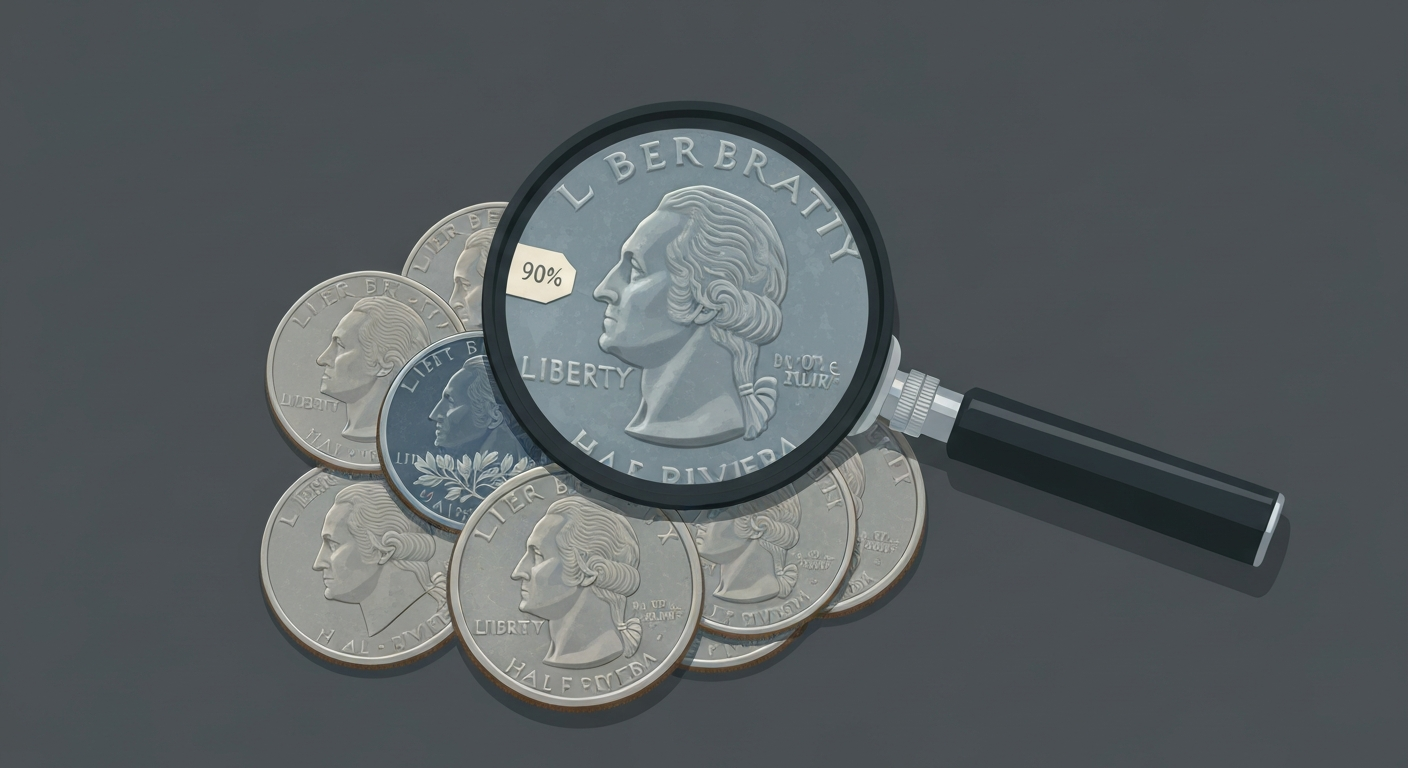
Junk silver refers to circulated U.S. silver coins minted before 1965 — primarily dimes, quarters, and half dollars — that contain 90% silver and carry no collector premium. These coins are valued almost entirely for their intrinsic melt value based on silver content, making them a popular, low-premium way to own physical silver.
What Is Junk Silver? Defining the Term
The term “junk silver” isn’t meant to imply worthlessness. It distinguishes these coins from numismatic coins, which command premiums for rarity, condition, or historical appeal. Junk silver coins are common, heavily circulated, and trade close to their melt value. Their appeal lies in reliable silver content and affordability.
For investors, junk silver offers a straightforward way to acquire physical silver at a low premium over spot. Because these coins were once everyday currency, they’re widely recognized and highly divisible — useful for smaller transactions or partial selling.
Which U.S. Coins Qualify as Junk Silver?
90% Silver Coins (Pre-1965)
These are the core of junk silver — 90% silver, 10% copper:
- Dimes: Roosevelt (1946–1964) and Mercury (1916–1945).
- Quarters: Washington (1932–1964).
- Half Dollars: Franklin (1948–1963), Walking Liberty (1916–1947), and 1964 Kennedy.
The Coinage Act of 1965 removed silver from circulating dimes and quarters and reduced it in half dollars, largely because rising silver prices made the metal worth more than face value.
40% Silver Coins (1965–1970)
- Kennedy Half Dollars (1965–1970): 40% silver. Less pure than the 90% coins but still counted as junk silver by many stackers.
35% Silver “War Nickels” (1942–1945)
- Jefferson “War Nickels”: 35% silver, identifiable by a large mint mark (P, D, or S) above Monticello. The least preferred category due to lower content, but an inexpensive entry point.
The 90% / 40% / 35% Distinction
The 90% coins are the most sought-after and liquid form. The 40% Kennedy halves contain less silver per coin and often price at a slight discount per ounce; 35% war nickels are the least preferred. These varying percentages are a direct result of the government’s response to fluctuating silver prices.
Silver Content per Face Value
A key convenience of 90% junk silver is standardized content by face value:
- $1.00 face value of 90% coins contains about 0.715 troy ounces of pure silver (the widely used, wear-adjusted figure).
The theoretical unworn content is 0.7234 troy oz per $1 face (a pre-1965 dime = 0.07234 oz, quarter = 0.18084 oz, half = 0.36169 oz), but 0.715 is standard for trading. If you’re new to the unit, see our explainer on the troy ounce. This makes estimates easy: $100 face value ≈ 71.5 troy oz of silver.
How Junk Silver Is Priced
Junk silver is priced off its melt value, tied to the current silver spot price:
(Silver spot price) × (total silver content in troy oz) ± (small premium/discount)
Example: at $25/oz spot, $100 face value (≈71.5 oz) has an intrinsic value of about $1,787.50. Dealers add a small premium when selling and take a small discount when buying. Premiums are usually lower than for modern rounds or bars, but they rise when physical demand spikes.
Advantages of Junk Silver
- Low premium — trades close to spot.
- High divisibility — small denominations for fractional selling or bartering.
- Recognizable and liquid — former legal tender, easy to trade.
- No numismatic risk — value is metal-based, not grade-based.
Disadvantages and Considerations
- Bulky — lower purity means more weight/space per ounce of pure silver.
- Dealer spreads — buy/sell gap can matter on small trades.
- Counterfeits — rarer for circulated coins, but verify weight/diameter and buy from reputable dealers.
- Sorting — 40% and 35% coins are priced separately from 90%.
Buying and Selling Junk Silver
Reputable coin dealers, local and online, are the main source — often sold by total face value (e.g., a $100 bag) or by rolls. Compare premiums across dealers. When selling, expect slightly below spot to cover the dealer’s costs. For a broader view of physical silver formats, see our silver bullion guide, and if you’re weighing coins against bars read buying silver coins vs silver bars.
Storage Basics
Junk silver doesn’t need airtight capsules since value isn’t tied to condition. Practical options include canvas bags, coin tubes, a home safe, a bank safe-deposit box, or an insured depository for larger holdings. Prioritize security and discretion.
US Silver Coin Specifications
| Coin | Years | Purity | Silver / coin (troy oz) |
|---|---|---|---|
| Roosevelt / Mercury Dime | Pre-1965 | 90% | 0.0723 |
| Washington Quarter | Pre-1965 | 90% | 0.1808 |
| Franklin / Walking Liberty / 1964 Kennedy Half | Pre-1965 | 90% | 0.3617 |
| Kennedy Half | 1965–1970 | 40% | 0.1479 |
| War Nickel | 1942–1945 | 35% | 0.0563 |
Frequently Asked Questions
What does “90% silver” mean?
The coin is 90% pure silver and 10% copper. The copper adds durability for circulation. This was standard for US dimes, quarters, and half dollars before 1965.
Is junk silver still legal tender?
Technically yes, at face value — but the silver melt value far exceeds face value, so the coins are treated as bullion, not spending money.
How do I estimate the value of my 90% junk silver?
Multiply total face value × 0.715 (troy oz per $1 face) × current silver spot price. Example: $100 face at $25/oz ≈ 71.5 oz × $25 = $1,787.50, before dealer premium/discount.
Is junk silver a good investment?
It’s a practical, low-premium way to own physical silver. Its value tracks the silver spot price and will fluctuate. Treat it as a way to hold a tangible asset rather than a guaranteed return. This is general information, not investment advice.
Bottom line: Junk silver is an accessible, divisible, and recognizable way to stack physical silver at low premiums — ideal for beginners who want metal content over collectible value.