Some provider links may be affiliate links. We may receive compensation. Read our editorial approach and disclosure.
Silver is one of the most counterfeited precious metals, precisely because it is affordable enough to be widely traded and valuable enough to be worth faking. The good news is that real silver has distinctive physical properties, and with a few simple tests you can catch the vast majority of fakes at home — no laboratory required. Here is how to check whether your silver coin is the real thing.
Start with the coin’s own details
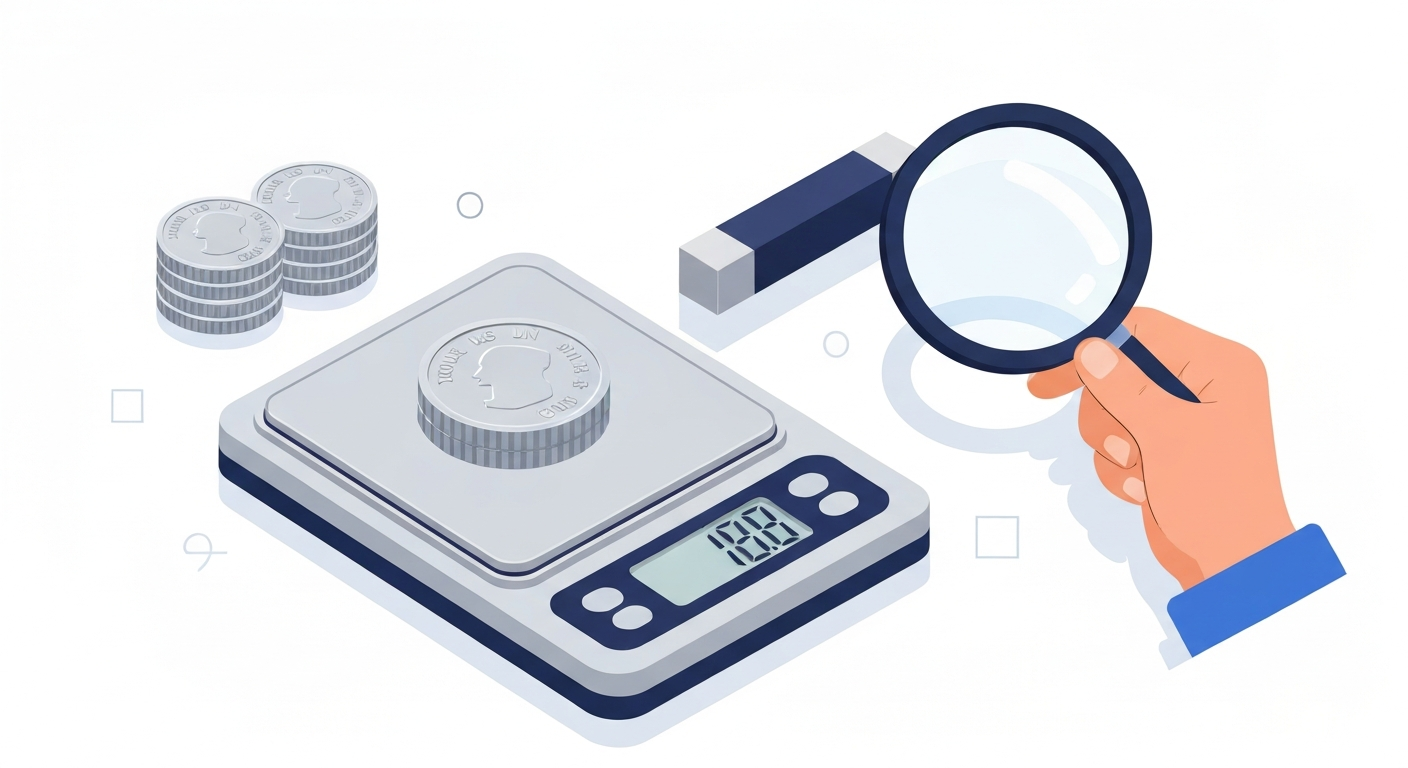
Before any physical test, examine the coin closely. Genuine bullion and numismatic coins are struck with crisp, sharp detail. Look for blurry lettering, soft or mushy design elements, wrong fonts, misspellings, or edges that look cast rather than struck. Compare the coin against a verified image of the same issue. Counterfeiters often get tiny details wrong, and a magnifying glass will reveal them.
Check the weight and dimensions too. Every official silver coin has a published weight and diameter — a one-ounce American Silver Eagle, for example, weighs 31.1 grams. A precise digital scale and a caliper are your best friends here; fakes made of cheaper metal are almost always off on weight, thickness, or diameter because base metals have different densities.
The magnet test
Silver is not magnetic. Take a strong neodymium magnet and hold it near the coin: genuine silver will show no attraction at all. If the coin jumps to the magnet or is clearly pulled, it contains ferromagnetic metal and is fake. There is also a slide test — because silver is diamagnetic, a magnet slid down a tilted silver bar will glide slowly rather than slipping freely. The magnet test is quick and non-destructive, but note that a non-magnetic result alone is not proof, since some fake alloys are also non-magnetic.
The ice test
Silver is the most thermally conductive metal there is, and this makes for a striking home test. Place an ice cube directly on the coin: on genuine silver, the ice will begin to melt almost immediately, as if the metal is pulling heat straight into the cube. On a fake made of lesser metal, melting is noticeably slower. It is a simple, dramatic demonstration of one of silver’s defining properties.
The ping test
Real silver has a beautiful, long, high-pitched ring when struck. Balance the coin on your fingertip and tap it gently with another coin: authentic silver produces a clear, sustained chime that lingers. A counterfeit made of copper, lead, or a base alloy gives a dull, short, flat thud. With a little practice — and by comparing against a coin you know is genuine — your ear becomes a surprisingly reliable detector. There are even phone apps that analyse the frequency of the ring.
The acid test
For a more definitive chemical check, a silver testing acid kit is inexpensive and widely available. You make a tiny scratch on an inconspicuous spot and apply a drop of testing acid; the colour it turns indicates the metal’s purity. The obvious downside is that it is mildly destructive and requires careful handling of acid, so most people reserve it for higher-value pieces or when other tests are inconclusive.
When to get a professional opinion
Home tests will catch most fakes, but sophisticated counterfeits — especially silver-plated tungsten or precisely weighted alloys — can pass several of them. For a high-value coin, the gold standard is a professional test: a jeweller or dealer can use an XRF analyser, which reads the exact metal composition without damaging the coin. If a deal feels too good to be true, or a seller resists letting you test the item, walk away.
The bottom line
The best approach is to combine tests rather than rely on any single one. Check the coin’s detail, weight, and dimensions, then run the magnet, ice, and ping tests — and use acid or professional XRF analysis for anything valuable. Above all, buy from reputable dealers in the first place, because the surest defence against a fake is never acquiring one. A few minutes of testing can save you from an expensive mistake.